
So, you're looking to get your head around UK number plates? You've come to the right place. This is your complete guide to every style you'll see on British roads, from the standard plates fitted at the dealership to the eye-catching 3D gel and 4D acrylic styles that car enthusiasts love.
We'll cut through the confusion of DVLA rules and regulations, making sure whatever you choose is fully road-legal and looks the part.
Whether you're a new driver trying to figure out what all the letters and numbers mean, or you're thinking about upgrading to a custom plate, we've got you covered. We'll walk through what each type looks like, what makes it unique, and the legal bits you need to know.
First, though, a quick look back. To really understand the plates we use today, it helps to know how we got here. Let's dive into the history that shaped the system we see on our roads, from the very first registrations to the modern format designed for millions of cars.
A Quick Spin Through Number Plate History
Ever wondered why UK number plates look the way they do? Their design isn't random; it’s the result of over a century of evolution, adapting to the ever-increasing number of cars on our roads.
It all kicked off with the Motor Car Act 1903. This brought in the very first registration plates, simple 'dateless' combinations that served their purpose for an impressive 60 years. But as cars went from a luxury to a household staple, the system needed a serious upgrade.
The first big shake-up arrived in 1963 with the 'suffix' system. This was a game-changer because it added a letter at the end to signify the car's age, a feature we now take for granted. This was eventually flipped in 1983 to the 'prefix' system.
By 2001, the format we see today was rolled out. It's a clever system built to last for 50 years, using regional markers and twice-yearly age identifiers to keep track of millions of vehicles. This journey from simple tags to a complex identification system really shows how much our roads have changed.
Standard vs Custom Number Plate Styles
When you think of a number plate, you probably picture the standard, flat, 2D printed style you see on most cars. They’re functional, they’re cost-effective, and they do the job. But let's be honest, they’re a bit plain. For those of us who want our cars to stand out, the world of custom number plates offers some fantastic ways to add a touch of personal flair.
The number plate system itself has been through quite a journey to get where it is today. This timeline gives you a great snapshot of how things have evolved over the years to keep up with the ever-growing number of vehicles on UK roads.
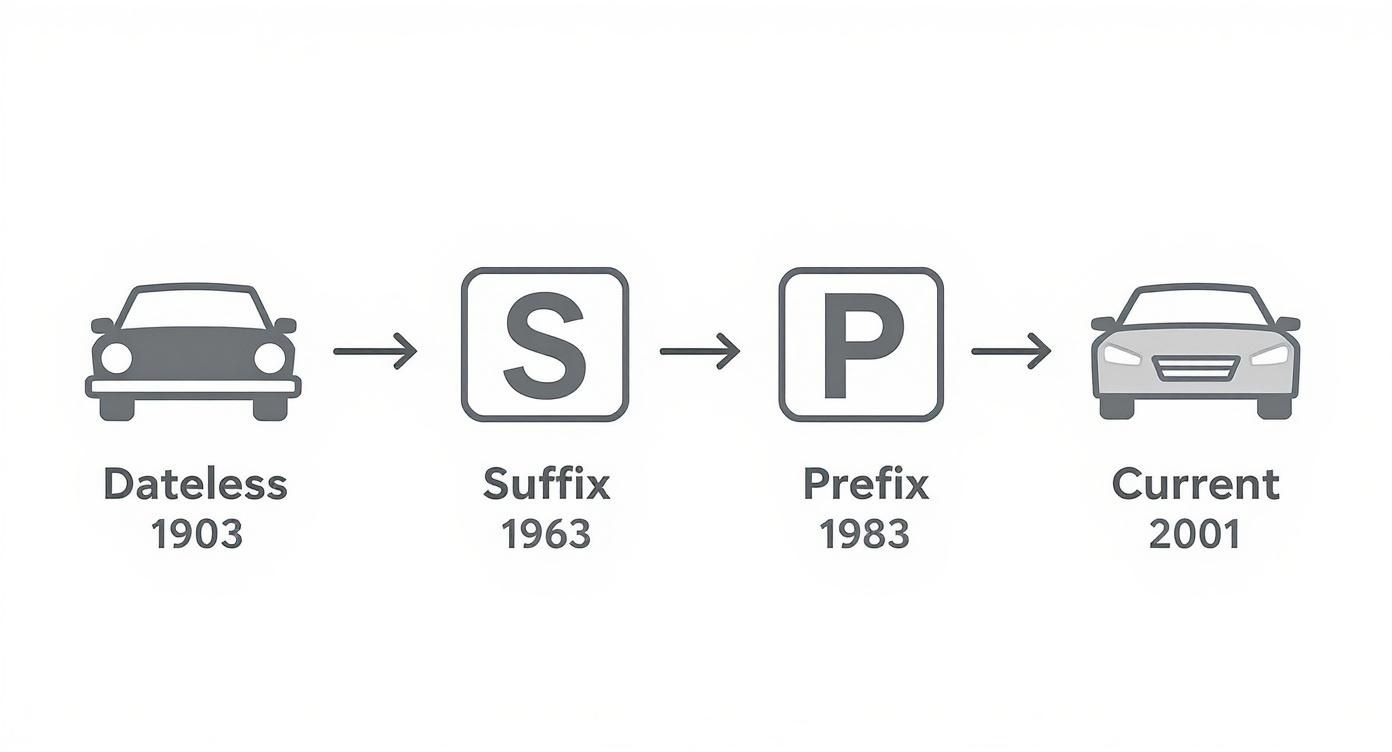
Today, that evolution continues, not just in the registration format but in the physical design of the plates themselves. This is where it gets interesting for car enthusiasts. Let's take a look at the most popular custom styles you'll see on the road.
A Comparison of UK Number Plate Styles
To help you decide what's right for your vehicle, this table breaks down the most common physical plate styles, from the classic printed version to the more eye-catching 4D designs.
| Plate Style | Key Features | Main Advantage | Key Consideration | BSAU 145e Compliant? |
|---|---|---|---|---|
| Standard Printed | 2D characters printed on reflective material. | Most affordable and widely available. | Basic, flat appearance. | Yes |
| 3D Gel Resin | Raised characters with a domed, gel resin topcoat. | Subtle, premium gloss finish with a rounded look. | Can be more expensive than standard plates. | Yes, if made by a registered supplier. |
| 4D Laser Cut Acrylic | Sharp, laser-cut acrylic characters bonded to the plate. | A bold, highly defined, and modern aesthetic. | The sharp edges can attract dirt. | Yes, if made by a registered supplier. |
| 4D Gel (Hybrid) | 4D acrylic base with a 3D gel resin topcoat. | Combines the sharp profile of 4D with the gloss of 3D. | Often the most premium-priced option. | Yes, if made by a registered supplier. |
As you can see, there’s a style to suit every taste and budget. The key is ensuring your choice is made by a reputable supplier who guarantees full compliance with UK law.
For instance, 3D gel plates give your registration a subtle lift with raised, resin-coated characters that catch the light beautifully, creating a rounded, high-gloss finish. On the other hand, 4D plates use precision laser-cut acrylic letters for a much sharper and more defined profile that really pops.
If you're curious about the different effects, you can explore our full range of 3D number plates to get a better feel for which style would best complement your car.
Cracking the Code: A Guide to UK Registration Formats
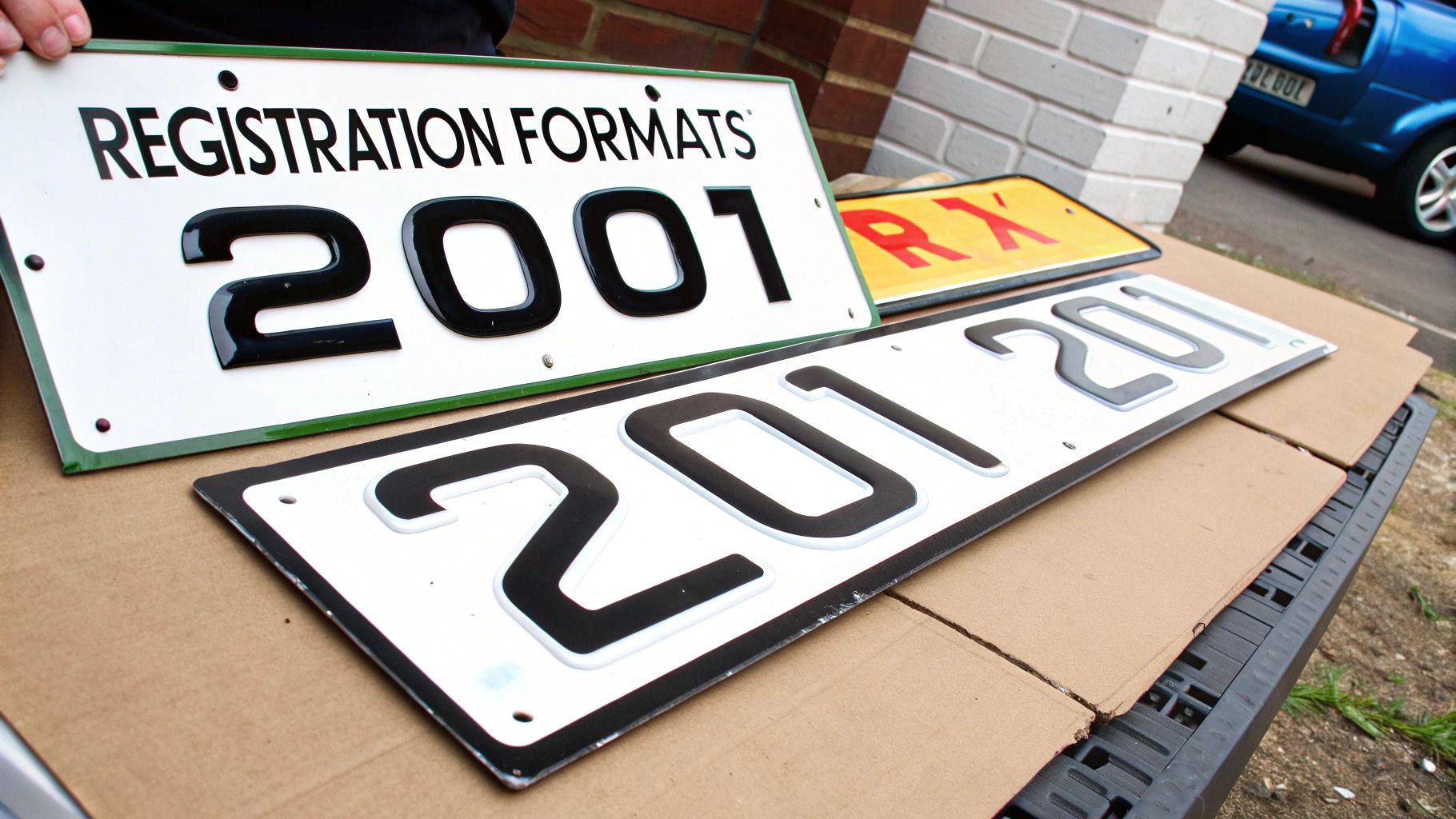
The letters and numbers on a UK number plate aren't just a random jumble; they tell a story about the car. The most familiar format is the one we've seen since 2001, which cleverly uses a local memory tag and an age identifier to pinpoint where and when a vehicle first hit the road.
But that's just one piece of the puzzle. The world of UK number plates is surprisingly diverse. You've also got the ever-popular personalised or 'cherished' plates, a huge market with over a million registrations changing hands each year. These let drivers add a unique touch to their ride.
Then there are the more specialist types, like temporary trade plates used by motor dealers or the distinct diplomatic plates for foreign officials. Getting to grips with these different formats is key, whether you're trying to figure out a car's history or looking to buy a private registration.
If you're keen to dive deeper, you can explore all the UK vehicle registration plate categories in more detail.
Staying on the Right Side of the Law
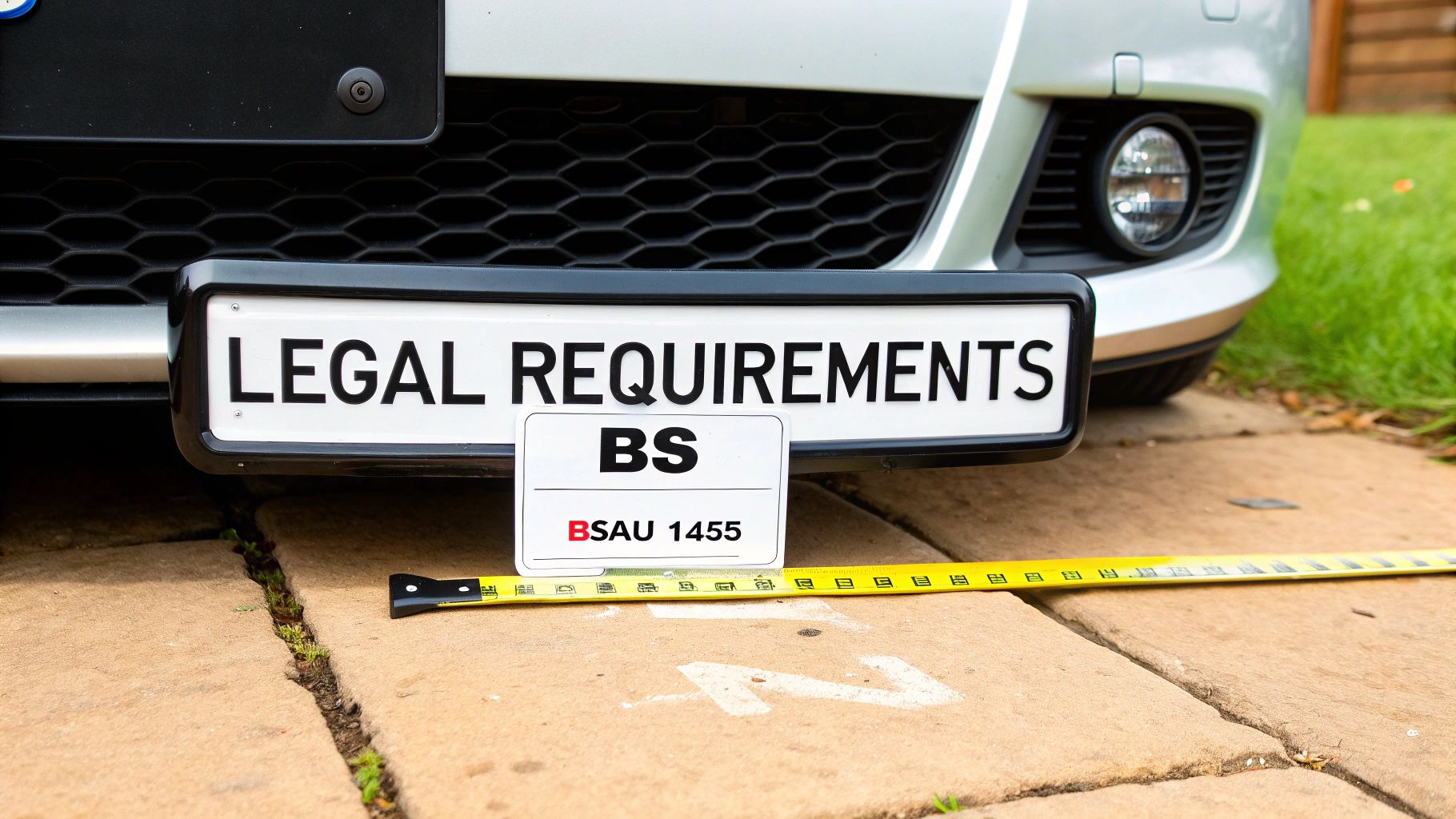
Before you even think about personalising your plates, you need to get the basics right. Making sure your number plates are fully road-legal isn’t just a good idea—it’s a strict requirement set by the DVLA, and getting it wrong can be costly.
For any plates made after 1 September 2021, the golden rule is the BSAU 145e standard. Think of it as the quality MOT for the plate itself, ensuring it's tough enough to withstand wear and tear, reflective enough to be seen, and resistant to bending or cracking.
This standard also dictates exactly what must be printed on the plate. You’ll need the supplier’s name and postcode, plus the British Standard mark. Critically, it also specifies the use of the official ‘Charles Wright’ font with exact character spacing, so ANPR cameras can read it without issue.
Getting creative with illegal tints, custom fonts, or adjusted spacing might seem tempting, but it can land you in serious trouble. The consequences range from a MOT failure and a fine of up to £1,000 to having your registration number permanently withdrawn. To make sure you’re fully compliant, it’s worth getting familiar with all the current DVLA number plate regulations.
Getting Your New Plates on the Road
So, you've picked out the perfect style for your car. What's next? The final part of the journey is getting the plates made up and fitted, and there are a few crucial rules to follow to keep things legal.
First things first, you can't just buy a number plate from anywhere. You must use a DVLA Registered Number Plate Supplier. This is your guarantee that the plates are made to the correct, exacting BSAU 145e standard we've been talking about.
To get your plates made, you'll need to prove you are who you say you are and that you actually have the right to use the registration number. This means you’ll have to show the supplier some original documents – typically your driving licence for ID and the vehicle’s V5C logbook to prove entitlement. It’s a straightforward check to prevent cloning and keep everything above board.
Fitting Your Plates
When it comes to actually attaching the plates to your vehicle, you've got a couple of solid options.
For a sleek, modern look with no visible fixings, high-strength adhesive pads are the way to go. They give a really clean finish, but you need to get the prep right. Our guide walks you through exactly how to fit a number plate with sticky pads for a secure, long-lasting bond.
Of course, there's always the traditional method: screws. It's a tried-and-tested approach that works perfectly well. Whichever method you prefer, just make sure the plate is fixed securely in the centre of the recess and isn't at risk of vibrating loose or falling off. A wobbly plate is an easy way to attract the wrong kind of attention.
Your Number Plate Questions, Answered
Got a question about UK number plates? You're not alone. Here are the answers to some of the most common queries we get from drivers.
Are 3D and 4D Number Plates Actually Legal?
Absolutely, yes. Both 3D gel and 4D laser-cut acrylic plates are completely road-legal, but with one crucial condition: they must meet the strict BSAU 145e standard.
This means the characters have to be solid black, using the official Charles Wright font with the correct spacing between them. As long as you buy from a registered supplier who makes them to this standard, your plates will be 100% legal and sail through an MOT.
Can I Get a Custom Font on My Plates?
That's a definite no. Using any font other than the standard ‘Charles Wright’ is illegal and will land you in trouble.
The rules are incredibly strict here. The only graphics allowed are the small national identifier flags (like the Union Flag or St George's Cross) on the left-hand side, or the green flash for electric vehicles. Anything else is a no-go.
What Documents Do I Need to Buy New Plates?
When you're ready to buy, you'll need to show original documents to prove two things: who you are and that you have the right to use that registration number.
- Proof of Identity: A driving licence or passport works perfectly.
- Proof of Entitlement: This is usually your vehicle's V5C logbook.
This isn't just red tape; it's a vital security measure that helps prevent criminals from cloning vehicles.
Article created using Outrank


